Doing by Not Doing: The Tao, Wu Wei, and the Mahjong Mirror
June 24, 2026 · Bill Hajdu · 6 min read
I've been reading the Tao Te Ching for 30 years.
And for most of those 30 years, I've been frustrated.
Not with the text. With the translations.
I'm an English teacher. I know what clear writing looks like. I know when a sentence is doing real work and when it's dressed up to sound important. And most Tao Te Ching translations I've picked up fall into the second category. They're overly poetic. They're abstract in places where Lao Tzu was specific. They feel like they were written for a graduate seminar, not for a person trying to live a thoughtful life on an ordinary Tuesday.
That bothered me. Because the original was written for common people.
So I started my own retranslation. I'm about a third of the way through. And the discipline I've brought to it is this: every sentence has to be clear enough to survive being run through Google Translate into another language and still mean something on the other side. If the idea gets lost in translation, the sentence wasn't clear enough.
This week I want to share some of what I've found, and explain why I think it connects directly to the Mahjong Mirror.
What Got Lost in Translation
Lao Tzu wasn't obscure. That's the thing most people don't realize.
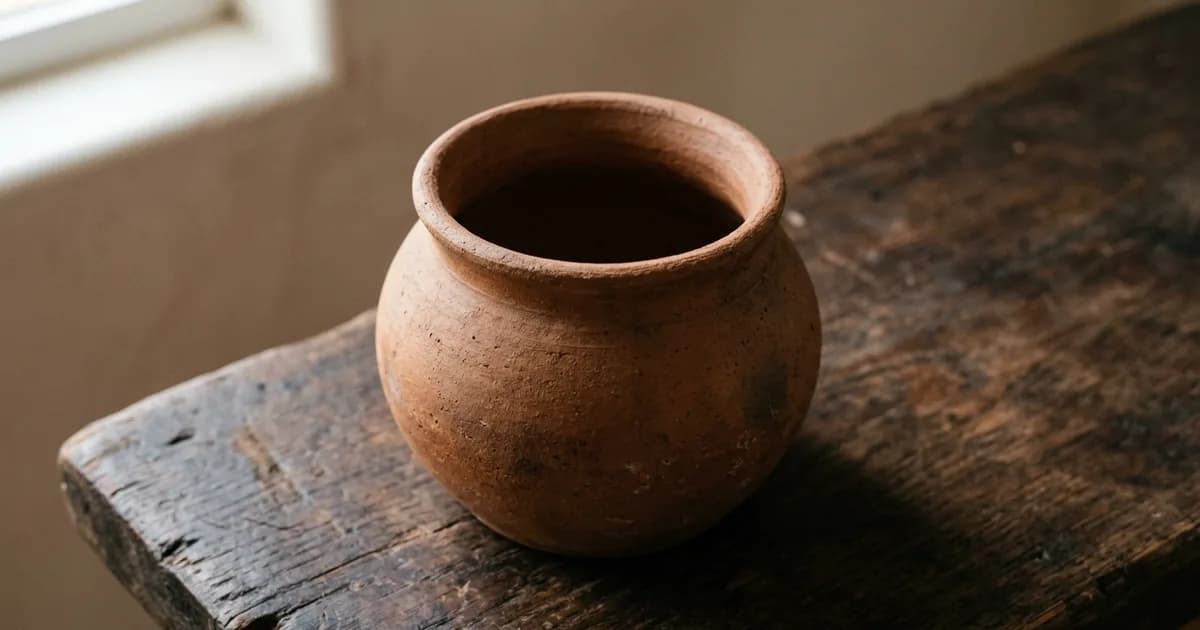
He used the kind of images that anyone would recognize. A clay pot. A wheel. Wood before it's been carved. He chose these images deliberately, because they're universal. You don't need a scholar to explain a clay pot. You've used one. You know what it does and what it doesn't do when it's full.
Here's one of the most important images in the whole text.
A clay pot is useful only because it's empty. The hollow space is the whole point of it. And a pot that is already full cannot hold anything new. Before you can put something new in, you have to empty it first. Not as a loss. The emptying is the preparation. The emptying is the point. The space you create is what makes the next thing possible.
Simple. Practical. True at the kitchen level and at every level above it.
Now here's what most translations do with that image. They paraphrase it into something about emptiness being the nature of usefulness, or the Tao as the void from which all things arise, and suddenly you're in a philosophy lecture instead of your kitchen. The image disappears. What's left is a general principle that sounds wise and applies to nothing specific.
That's the problem I'm trying to fix.
The Spokes and the Hub
Here's another one.
A wheel has spokes. The spokes matter. But what makes the wheel actually function is the empty space at the hub where the axle fits. Remove the emptiness at the center, fill that space with more material, and you don't have a stronger wheel. You have something that can't turn.
Lao Tzu is making an argument about what creates usefulness. It's not just the solid parts. It's the relationship between the solid parts and the empty spaces between them.
Applied to your life: the value isn't just in what you fill your time with. It's also in what you leave open. The decision you haven't made yet. The conversation you haven't forced to a conclusion. The space where something new can enter.
Most people in the Fire Horse year are filling the hub. They are adding more. More plans, more commitments, more responses, more force. And the wheel stops turning.
Wu Wei is partly about protecting the hub.
The Uncarved Wood
One more.
Uncarved wood has infinite possibility. It can become anything. The moment you carve it, you have committed it to one shape. That shape may be beautiful. But it is no longer everything it could have been.
Lao Tzu isn't arguing against carving wood. He's making a point about the value of the state before commitment. Before you fix a decision, before you lock in a direction, there is a moment of maximum possibility. That moment deserves real attention. Most people rush past it.
In the Mahjong Mirror framework, the First Angle asks: what is the central theme of this situation? Not the surface problem. Not the tactical question. The real thing underneath. Getting that right is the work of the uncarved wood moment. If you rush to the carving, you may carve something that doesn't serve the real shape you needed.
The Same Discipline
This is what I find most compelling about the connection between the Tao Te Ching and the Mahjong Mirror.
They're working from the same root discipline.
The Mahjong Mirror asks you to empty the pot before you decide. The First Angle isn't "what should I do?" It's "what is actually happening here?" That's the clay pot. Put down what you think you know. Empty the assumptions. Then read the situation.
The Mirror's framework creates the hub. It builds the empty space where honest reflection happens before action. Without that space, you're filling the hub. Without the hub, the wheel can't turn.
Wu Wei, in the Mirror's terms, is the quality of action that emerges when you've done the Mirror's work honestly. Not forced. Not performed. Not chosen because it looked bold or safe. Chosen because it's what the situation actually calls for.
That's what makes a decision feel effortless even when it's hard. You're not fighting the current. You've read the current, and your action is aligned with it.
The Two-Page Book
The book I'm working on has a specific structure.
The left-hand page carries the translation. The right-hand page gives three to five things you can actually do with it, applicable almost any day of the week.
That structure reflects a belief I've held for 30 years: ancient wisdom that stays theoretical isn't doing its job. Lao Tzu didn't write the Tao Te Ching to be admired. He wrote it to be used. By common people, in common situations, with real effects on how they lived.
The same is true of the Mahjong Mirror. The framework isn't an intellectual exercise. It's a tool. You use it on the decision in front of you, and the reading shifts how you see that decision, which shifts what you actually do.
Empty the pot. Read the wheel. Find the uncarved wood.
That's the practice. Not complicated. But it requires you to stop and actually do it, rather than staying in motion because motion feels like progress.
Frequently Asked Questions
What are the key images in the Tao Te Ching and what do they mean?+
How does the Mahjong Mirror connect to the Tao Te Ching?+
Why is Bill Hajdu retranslating the Tao Te Ching?+
What is the uncarved wood image in the Tao Te Ching?+
What does 'empty the hub' mean in Taoism?+
Explore the Mahjong Mirror
The Mahjong Mirror is the practical framework that brings this kind of reflection into real decisions. The book walks you through all four angles in a way that's immediately usable.
Explore the BookBook a Reading